Urban Pousses — Competitive intelligence and niche arbitration by AI agents
Thirty competitors mapped across five offer types, eight niches compared on four criteria and a strategic recommendation, for a microgreens grower in the Oise — every player verified against the French company register.

Context
Urban Pousses grows microgreens indoors in the Oise and sells them to chefs, local authorities and regional distributors. It is a niche business, and that niche has an awkward feature: it exists in no public statistics. Neither Agreste, nor FranceAgriMer, nor the market bulletins track microgreens. The only market figures available come from private research firms that copy one another and publish the same growth rate from one edition to the next on different baselines.
The result is a grower operating blind — with no view of who produces what, how far away, at what price, and above all no way to tell which of their growth ideas are realistic. Should they sell seeds? Train other growers? Sell turnkey containers? Go after school canteens? Each of those questions represents an investment, and none of them had a documented answer.
I built a system of five research agents launched in parallel, each on one market segment: regional microgreens growers, industrial-scale indoor farming players, equipment and know-how suppliers, consumer market and distribution, and finally market context and trends. Every company cited is verified against the public company register — legal form, incorporation date, headcount, trading status — and every statement is flagged as either read at source or inferred.
That protocol produced two findings no keyword monitor would ever have surfaced. First, the market is not competitive but made up of regional near-monopolies, because the product does not travel: almost every verified grower delivers to its own catchment area only. Second, the Oise, the Somme and the Aisne are a blank spot — no active microgreens grower was identified there, cross-checked against the county's own directory of market gardeners. The strategic question was therefore not "how do we differentiate" but "how do we occupy an already empty territory before it closes".
The need
- Establish who the real competitors are, how far away and on what positioning
- Separate the immediate threat from the structural one, and the competitor from the sales channel
- Assess honestly which diversification paths are accessible and which are traps
- Produce a recommendation on offer, positioning and commercial sequence — not a monitoring report
- Replace information hunted down case by case with curated information that arrives
Measured results
- 30 competitors mapped across 5 offer types, each placed by real competitive proximity rather than distance alone
- 8 niches compared on 4 criteria: maturity, accessibility for the business, three-year trend and incumbent competitors
- A recommendation in 3 parts: offer strategy, competitive strategy and commercial sequence
- Structural finding: no active microgreens grower identified across the Oise, the Somme and the Aisne
- Six liquidations verified on the register in four years in this market, two of them within 100 km of the production site
- One diversification path ruled out on evidence: five turnkey-equipment players disappeared between 2022 and 2026
- — Custom AI intelligence and analysis agent
- — Consultancy or business-school assignment
- — Keyword-based SaaS monitoring tool
- — Manual monitoring by the owner
A system of AI agents specialised by market segment, launched in parallel, with systematic verification of every player against the public company register.
A SaaS tool monitors keywords: it would have returned articles, not a market map, and it would never have spotted that three counties are empty — an absence triggers no alert. A consultancy charges several thousand euros for a study frozen on the day it is delivered. Manual monitoring costs the owner the time already spent in production. The agent builds the map in a few hours, cites every source, discards what it cannot verify, and can be re-run when the market moves. The value is not the document, it is the ability to redo it.
The solution
Five research agents launched in parallel, one per market segment, under a shared and non-negotiable brief: cite only real, verifiable companies, systematically separate what was read at source from what was inferred, and report missing data as missing rather than filling it with estimates. Every player is cross-checked against the public company register to confirm existence and trading status — which allowed several apparent competitors to be dropped because they had ceased trading, and others to be reclassified because they did not produce what they seemed to. The deliverable consolidates the map by offer type, the niche comparison table, the recommendation, and an explicit list of the points left unverified.
Thirty competitors mapped across five offer types, eight niches compared on four criteria and a strategic recommendation, for a microgreens grower in the Oise — every player verified against the French company register.
A system of AI agents specialised by market segment, launched in parallel, with systematic verification of every player against the public company register.
This trade-off is what the audit + roadmap covers (€650)Similar projects
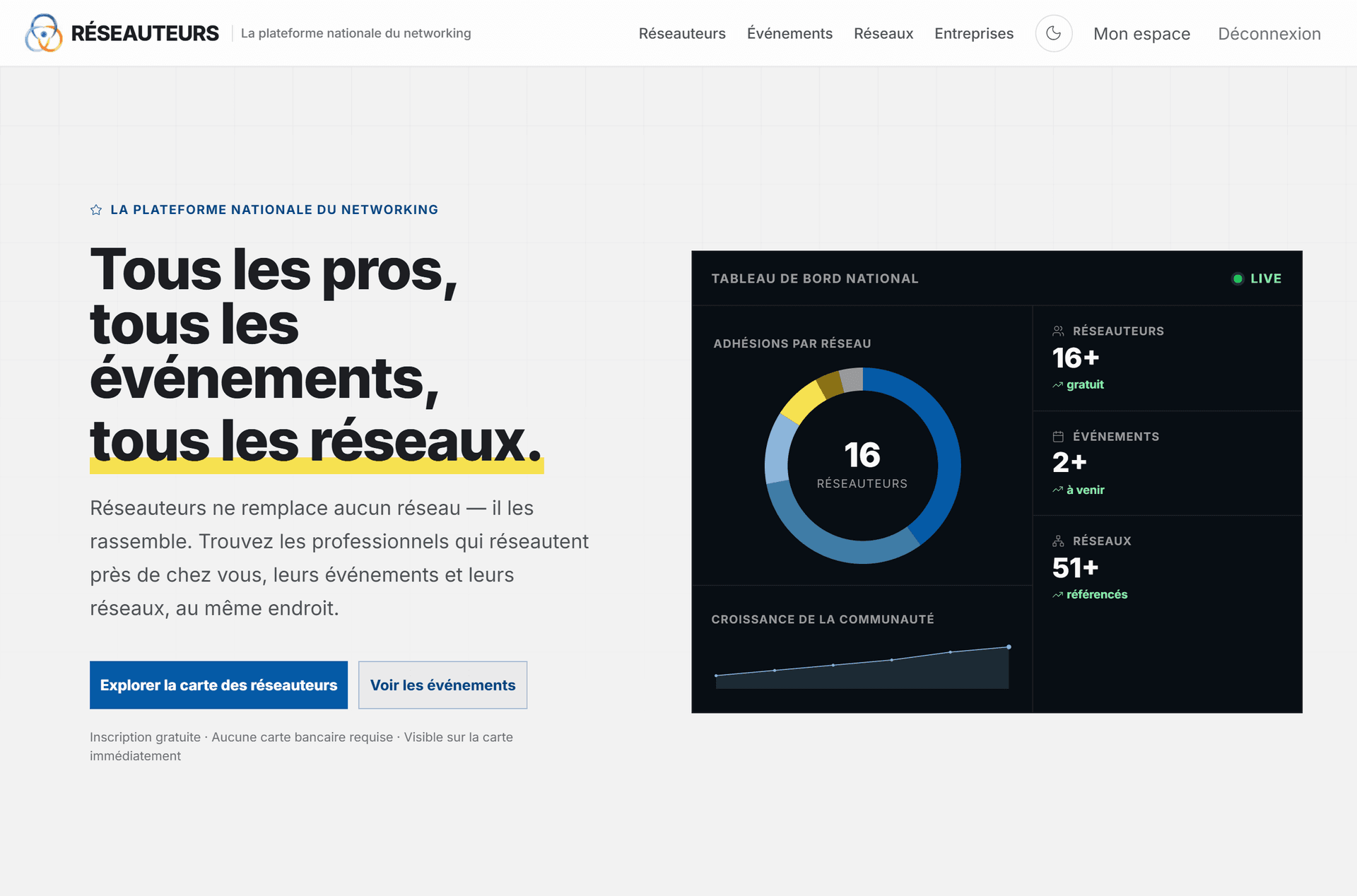
Réseauteurs
Built Réseauteurs, France's national networking platform: a directory, an agenda and an interactive map bringing French professionals, events and business networks together in one place.
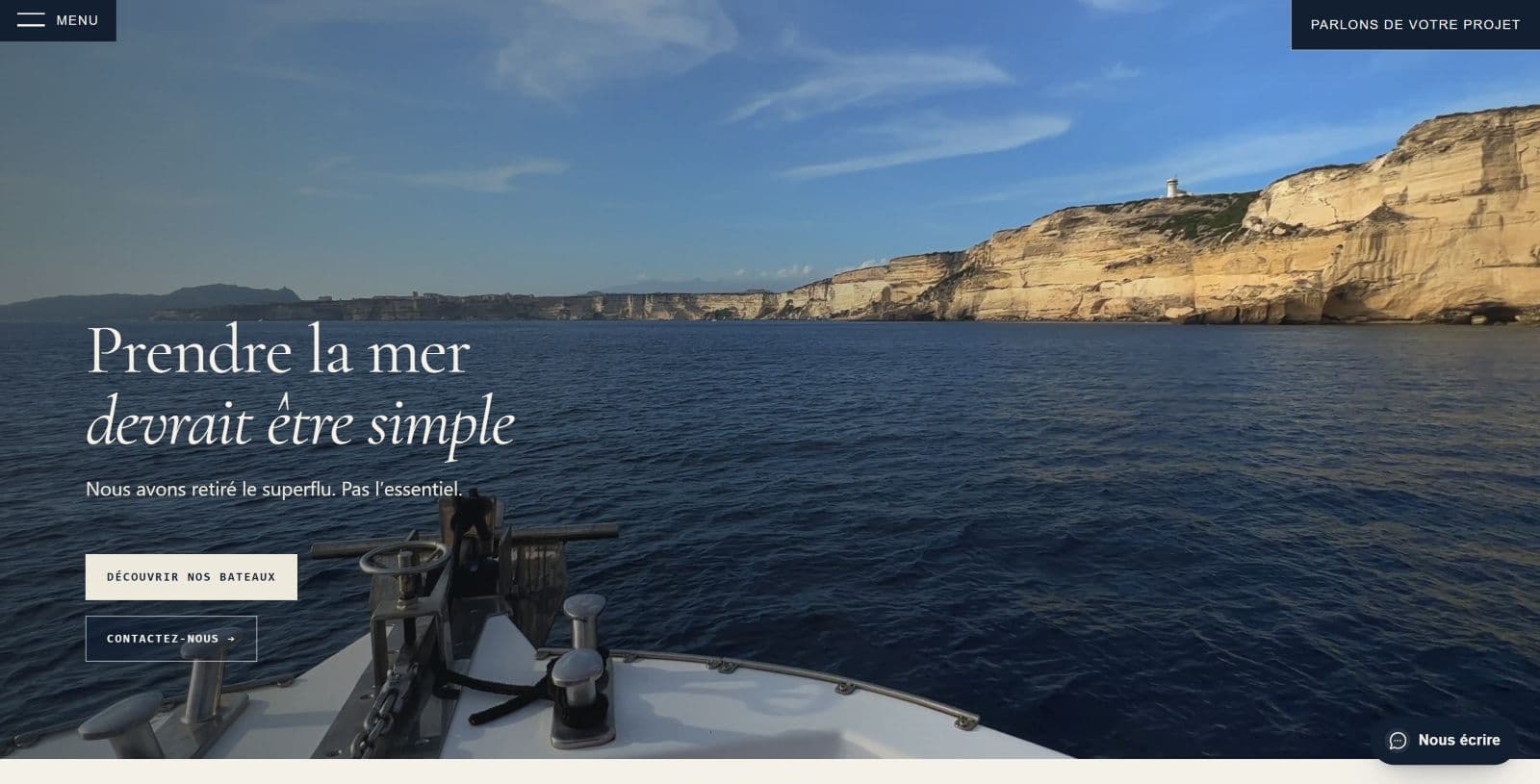
Arguin Marine
Built the WordPress brochure site for Arguin Marine, a high-end boat-rental service on the Arcachon Basin: a simple, polished online presence that's easy to manage.
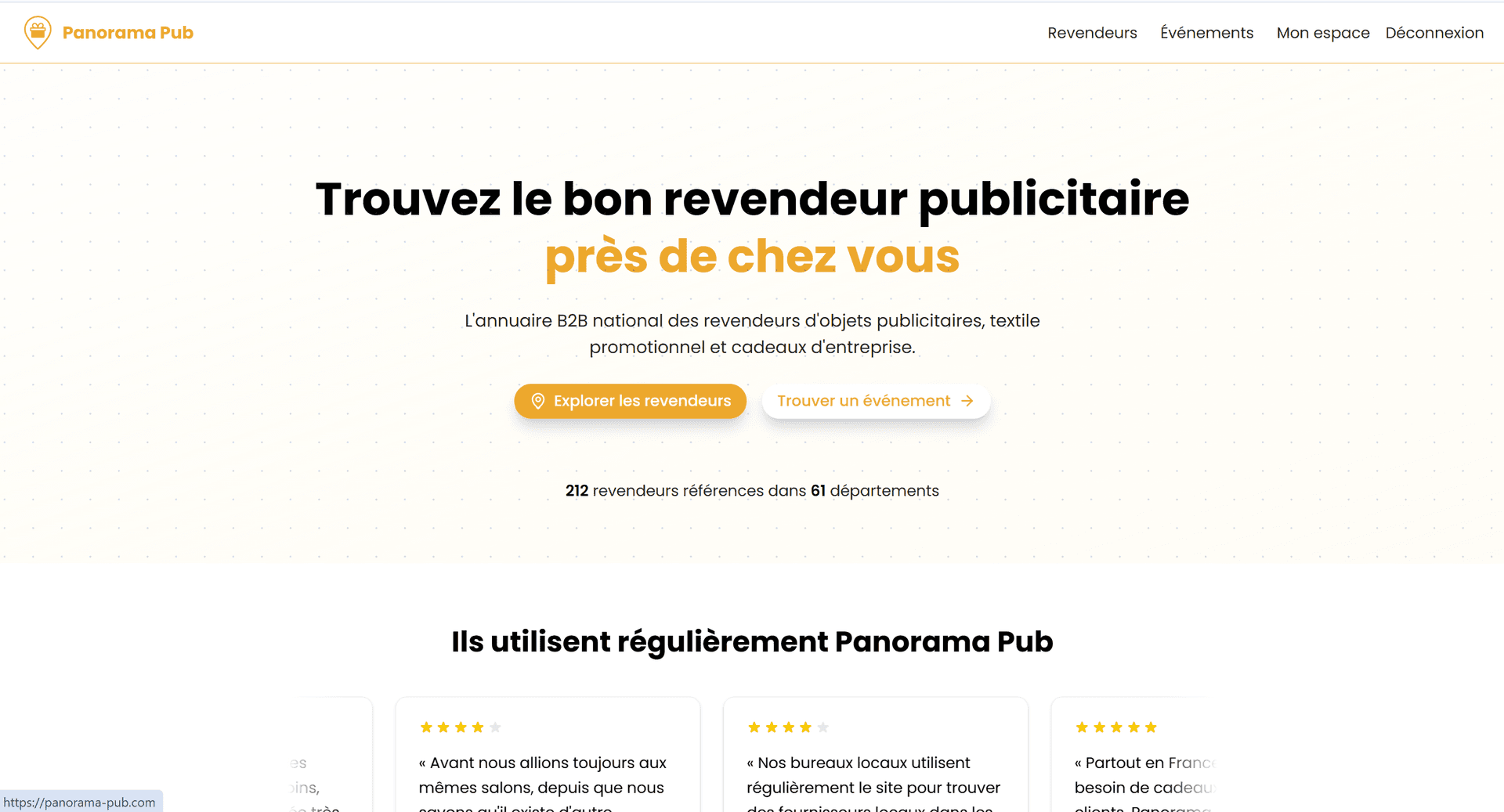
Panorama Pub
Launching Panorama Pub, the first online directory dedicated to promotional-products suppliers — a brand-new digital marketplace connecting buyers and suppliers in a still-fragmented sector.